Brazil has a word based off social media platform Orkut’s rise and fall: orkutização, which means when a social media site becomes less cool after it becomes mainstream.

What is Orkut?
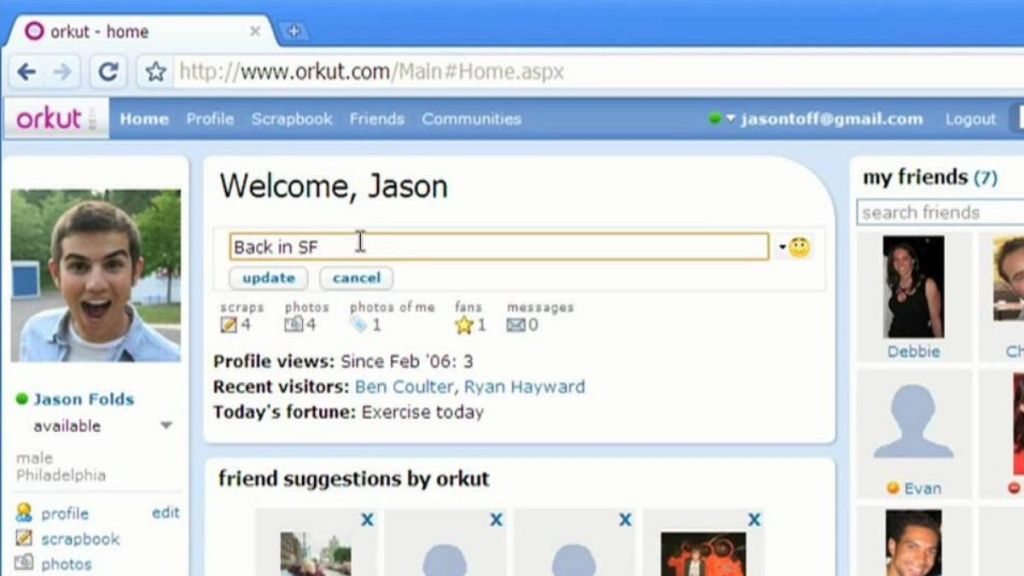
If you’re like me, you probably never heard of Orkut. It was an invitation-only social media site from 2004 to 2014, and was owned and operated by Google. Its creator was Google employee Orkut Büyükkökten, who built and ran the platform. At its peak, it had 300 million users. The concept was to make an online community built on real connection, while filtering out hate and disinformation. Beyond that, it allowed users to rate their friends, put them on various lists based on attributes (from trustworthy to sexy), and interact in whimsical ways like that. It only had positive attributes, and never allowed users to have lists of negative attributes.
What was Orkut’s Branded Image?
In a simple word, Orkut was built on positivity. There was no putting down strangers from behind your keyboard, because the site was made for interacting with people in your network. There wasn’t a way to rank your friends based on negative attributes, but rather only ways to lift up your friends with what you liked about them. According to his website a few months ago, Orkut’s creator wants to bring Orkut back. He believes now is a time when people might really want the positive vibes only goal of Orkut. Orkut believes that loneliness and isolation from authentic social interactions is at an all-time low, and negativity is at an all-time high. While it won’t be Orkut as we know it now, the creator is getting ready to bring the best aspects of Orkut back into the social media world.
Why was it Successful?
Orkut was backed by Google, which allowed the creator to make it into what he wanted it to be. He wasn’t limited by finances or reach. He was able to make the site into a branded experience, built on optimism and authentic connections between real people. It took off in Brazil particularly, and the theory is that Brazilian culture is a naturally warm and positive culture. It was a social media site that fit in with what the population already knew and loved.
Why was it Closed Down?
While the site exploded mainly in India and Brazil, it never got a huge foothold in other markets because of tech issues. It was also up against other social media sites, like Facebook, that were also exploding worldwide. As competitor Facebook adapted to newer content presentation and streamlining its site, Orkut fell behind. Orkut also was never built to be a site for so many people, which led to slow servers. Google eventually decided they did not want to compete with Facebook and shut the site down.
What Can We Learn?
- Positivity as a brand works. That was what attracted the 300 million users to Orkut, and not what caused it to be shut down.
- Maybe now isn’t the right environment for what you want to do. Don’t be afraid to revisit an idea when things change.
- Know your limitations and be prepared to either adapt to them or extend them. Sometimes extending isn’t possible.
 Rebecca Wolford
Leave a comment