Okay, here’s the thing. I have to do this post for my marketing class, but I think there are several extremely relevant points missing from the case study prompt we were given. The case study was on how successful WeChat (Weixin in Chinese) is as a social media app, but it completely ignores the context in which it was created that lead to its success. I am having a hard time writing strictly the class points and praising this social media platform in good conscience.

Let’s Hit The Mandatory Class Points
Yes, WeChat is a wildly popular social media app, predominantly in China. It was started as a social media app for things like posts and sharing pictures. Think early days Facebook or Twitter. It has since expanded into a single app that offers multiple functions, like ordering taxis or reading the news or shopping, all without having to switch to another browser. Its success is largely because it is a one-stop for everything its user might need. Its interface was easy to use, and users didn’t need to bounce between multiple apps to do almost everything in their life. It’s convenient and saves time to have everything all in one place. That aspect seemed to be way ahead of its time. It has since evolved to the point that Chinese citizens almost need the app to manage everyday life.
…But, We Are Missing The Context of Its Creation
WeChat was made by a state-sponsored tech company. Chinese users have different terms and conditions than foreigners, which allows for strict monitoring of Chinese citizens. Because of that and the complete control the government then had over almost every aspect of a Chinese citizen’s tech life, they were able to easily censor information and even spread misinformation. They can track every aspect of a citizen’s life because the app is used for essentially everything. Because other platforms were banned in the country over data collection and censorship rules and WeChat was the preferred way of controlling the population’s activities and information, it made the expansion of WeChat in everyday life extremely easy compared to other companies in other countries.

Censorship and Control
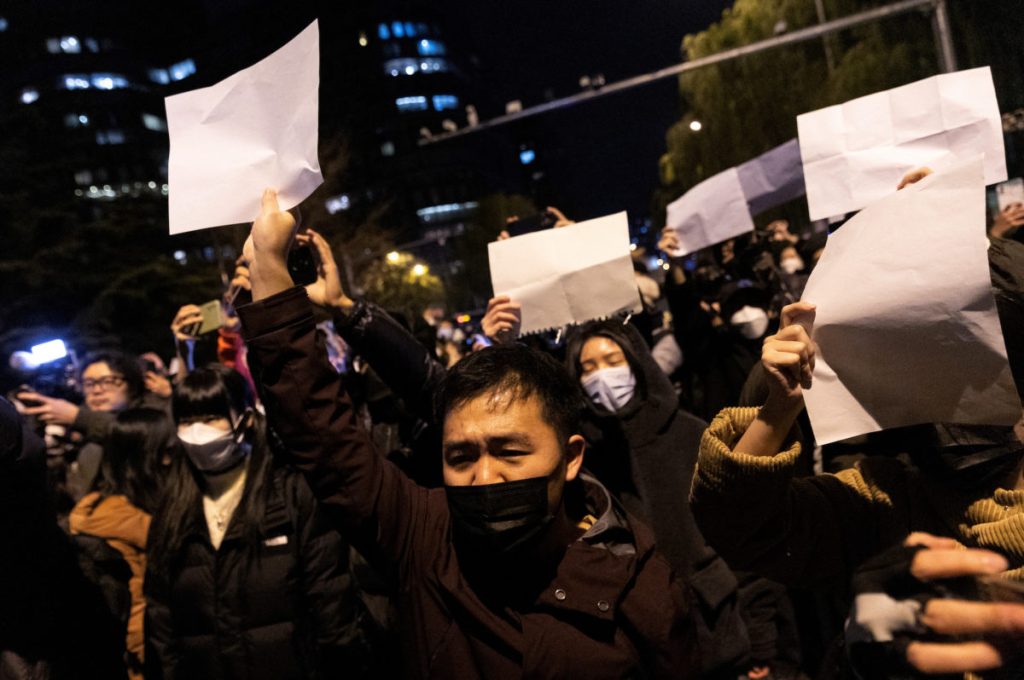
While there are ways to get banned from Facebook and other platforms in the US, it tends to be for hate speech, violence, and other actions that are directly harmful to someone. On WeChat, a user can be banned for saying things that are against the image that the government is trying to control. In order to get the account back, a user has to submit to facial recognition and vocal recordings. We won’t get into the implications of that. This is for a marketing assignment, not a ubiquitous technical surveillance course.
If you weren’t aware, China also implements a social credit system. You earn points for being a good citizen, like paying bills on time. If you lose enough on the credit system, you can be placed on a blacklist for life. WeChat is a tool used to manage that system. Users can even report their neighbors for infractions.
So, What Can We Learn?
Would WeChat have been so popular if it had been developed in another country? Maybe. Convenience is always attractive to users, so maybe having in all-in-one app would have worked elsewhere, in a country where it wasn’t essential for everyday life. But, when we look at the other aspects of WeChat, definitely succeeded because of the state-sponsored surveillance in this context.
So, I guess my takeaway this week is don’t blindly admire successful companies.
 Rebecca Wolford
Leave a comment